|
|
|
The Question
What if the best leaders make themselves unnecessary? |
|
|
 |
|
Most people measure it by how much their team needs them, the approvals, the problem-solving, the firefighting. But that’s backwards.
The real measure of leadership isn’t dependence. It’s independence.
The best leaders build teams that eventually don’t need them. They design systems that can think, decide, and adapt without constant oversight. They build a culture that still performs when they’re out of the room.
It’s an unsettling truth for many leaders, especially founders and high performers who built their identity on being indispensable. But leadership isn’t about being needed. It’s about being replaceable by design. |
|
|
|
The Research 🔍
|
 |
|
Research continues to show that organizations thrive when leaders trade control for capability.
McKinsey found that while most executives assume faster decisions mean lower quality, the opposite is true: speed and quality go hand in hand when leaders push decisions to where the information lives and clarify ownership early. In short, clarity beats control.
Decades of behavioural science show that empowered employees are more engaged, less stressed, and more likely to perform at a high level. They don’t just execute, they think, adapt, and innovate. And when entire teams (not just individuals) are empowered, both output and satisfaction go up, especially in complex environments.
Google’s internal research backs this up. Their multi-year Project Oxygen study found that teams with managers who empower without micromanaging deliver better results and report significantly higher trust and retention.
When leaders step out of the spotlight and build real autonomy, everything scales. Speed. Smarts. Ownership. You don’t lose control, you multiply capability.
|
|
|
|
|
|
Every leader hits a point where their strengths become their ceiling.
The founder who once made every call becomes the bottleneck. The manager who solved every problem now slows every solution. What made you effective early on, your drive, precision, and involvement, eventually limit what your team can do without you.
That’s the paradox of leadership growth: the better you become, the less the work should depend on you.
The shift starts when you see yourself not as the operator, but as the architect. Your job isn’t to hold it all together; it’s to design a system that holds itself together.
That means codifying how decisions get made, building rituals that maintain alignment, and teaching your people how to think, not just what to do. Because when your systems carry the load, your team carries the mission. |
|
|
|
Your Hack ⚙️ |
 |
|
Run what I call The Leadership Endgame: a mindset shift that forces you to think like the architect, not the operator.
Most leaders talk about succession in abstract terms, as if it’s something that happens later. But real succession happens daily, in every meeting, every question you answer, every decision you either own or pass on. The endgame starts when you stop asking, “How can I do this better?” and start asking, “How can my team do this without me?”
Here’s how to start:
1. What do I need to keep?
These are your leadership principles, the few truths that define how you build, not how you manage. Keep your standards, your values, your cultural non-negotiables. These are the anchors that hold the system steady when you step back. But everything else? It’s fair game. The goal isn’t to preserve your way of doing things; it’s to preserve what makes the team great.
2. What do I need to teach?
This is where most leaders fall short. You have instincts that no playbook captures: your internal algorithms for judgment, trade-offs, and timing. When people come to you for answers, don’t just give them the “what.” Explain the “why” and the “how” behind your thinking. Show them the principles underlying the decision. That’s how you transfer judgment, not just tasks.
When you start teaching your decision logic, how you weigh risk, when you bend rules, and how you know it’s “good enough”, your leadership becomes a transferable skill instead of a personal trait. It’s the difference between having followers and having builders.
3. What do I need to leave behind?
This is the hardest one, because it asks you to confront ego. Every leader carries habits that once made them effective but now limit their team’s potential: the need to review every deliverable, to protect people from failure, to prove they still add value. These reflexes come from fear, fear of being irrelevant, fear of being forgotten, fear that if the team doesn’t need you, you’ve lost your purpose.
But leadership isn’t about clinging to purpose. It’s about creating it for others. Letting go is the ultimate act of confidence. When you deliberately step back, you invite others forward, and in that space, they grow.
The Leadership Endgame isn’t about disappearing. It’s about designing a system so strong that it can thrive without you. That’s how you know you’ve moved from leading a team to building a legacy. |
|
|
|
|
|
There’s a quiet fear every ambitious leader carries: What happens when they no longer need me?
Early in your career, being needed feels like proof of value. You’re the one with answers, the problem-solver, the glue. But if you stay in that mindset, you eventually become the bottleneck, and the thing that made you successful becomes the thing that holds everyone back.
Mature leadership flips that fear on its head. You stop trying to be irreplaceable, and you start taking pride in being unnecessary. Because that’s the point: to build people, systems, and cultures that can stand on their own. The real test of leadership isn’t how well your team performs when you’re there, it’s how they thrive when you’re not.
If you can walk away and the team still delivers, still grows, still pushes the vision forward, that’s not a sign of your absence. It’s the ultimate evidence of your impact.
Your name might fade from the org chart, but your fingerprints remain on how the team thinks, decides, and leads.
That’s the paradox of legacy: you don’t leave it by staying in the story. You leave it by teaching others how to write the next chapter. |
|
|
|
Unleash Your Leadership Potential:
Your Accelerated Leadership Course |
 |
|
Feeling stuck in your leadership journey?
The challenges of modern management, like connecting with unmotivated teams or navigating office politics, can leave even the best managers frustrated and overwhelmed.
But here's the truth: You don't have to face them alone.
💡 The Six Levels Leadership Course will empower you to:
- Shift from tactical to strategic thinking effortlessly.
- Motivate and energize your team like never before.
- Champion innovation while driving impactful change.
- Master organizational dynamics with confidence.
- Achieve more—even with fewer resources.
Why wait to become the leader your team deserves?
➡️ Start transforming your leadership style today.
|
| LEARN MORE |
|
|
|
Liked this? Share it with a manager who needs it. |
|
|
|
P.S. We have a podcast!
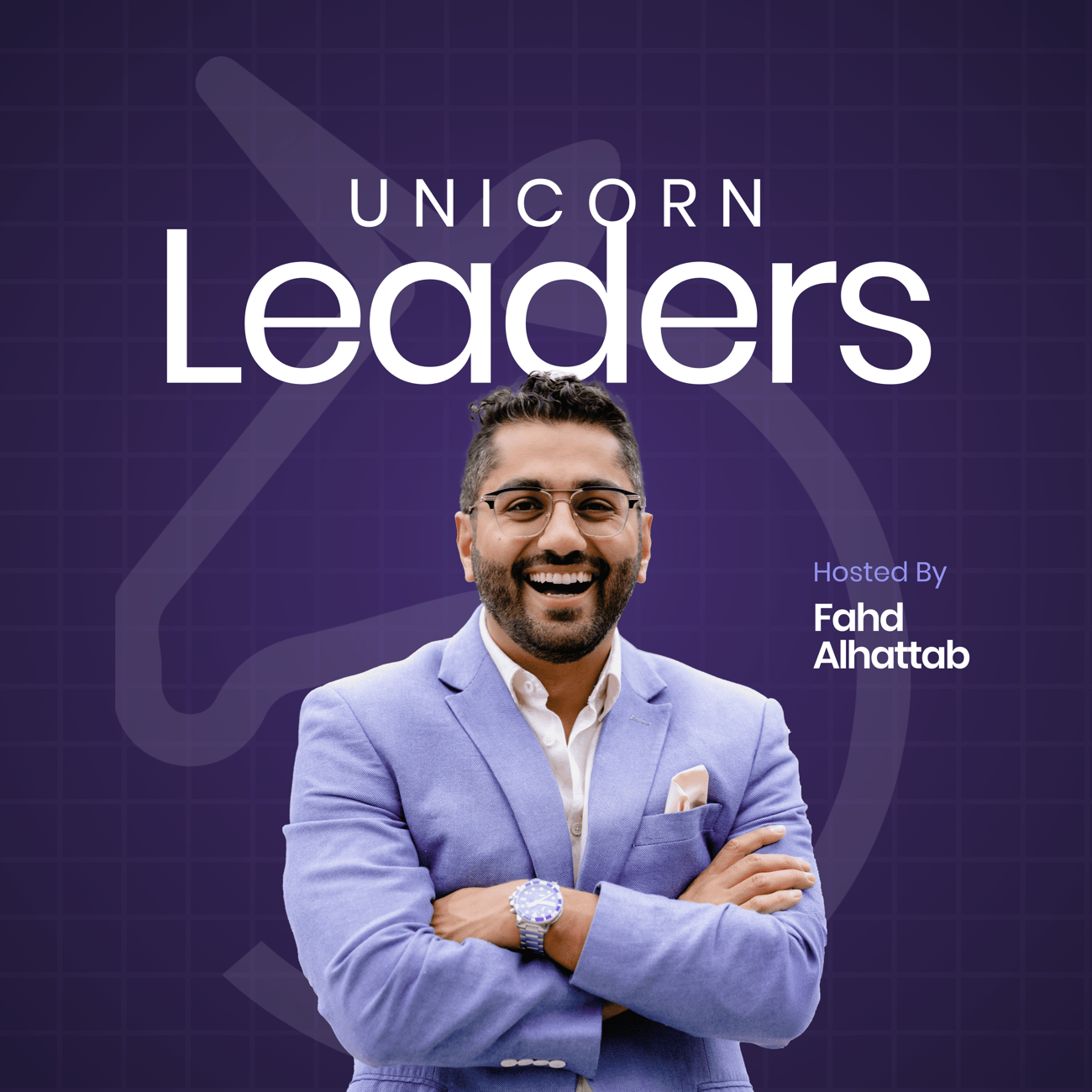
Unicorn Leaders is a podcast for managers, entrepreneurs, and other leaders who have an insatiable curiosity for creating high-performing teams while leading unicorn start-ups. |
| LEARN MORE |
|
|
|
|
|
|